
The shape of the journey
The shape of the journey
Every post on this site lives somewhere on a path — a path that arrives somewhere higher than where it begins. Here is the map, and where you might find yourself on it.
We came across the work of Jared Halverson a few years ago. Jared is an associate professor of ancient scripture at BYU and one of the most thoughtful teachers we have encountered on the subjects of faith, struggle, and growth. He developed a simple three-part framework — Creation, Fall, Atonement — to describe the journey people take through a faith crisis. When we first heard him describe it, something in us went quiet and still. We had been looking for language to describe what we had lived through, and here it was.
We began using it. Not just for faith, but for everything. The more we sat with it, the more we saw it everywhere — in how our children were growing up, in how our own parents were aging, in how we had each navigated the long and painful unraveling of our first marriages. The framework kept fitting.
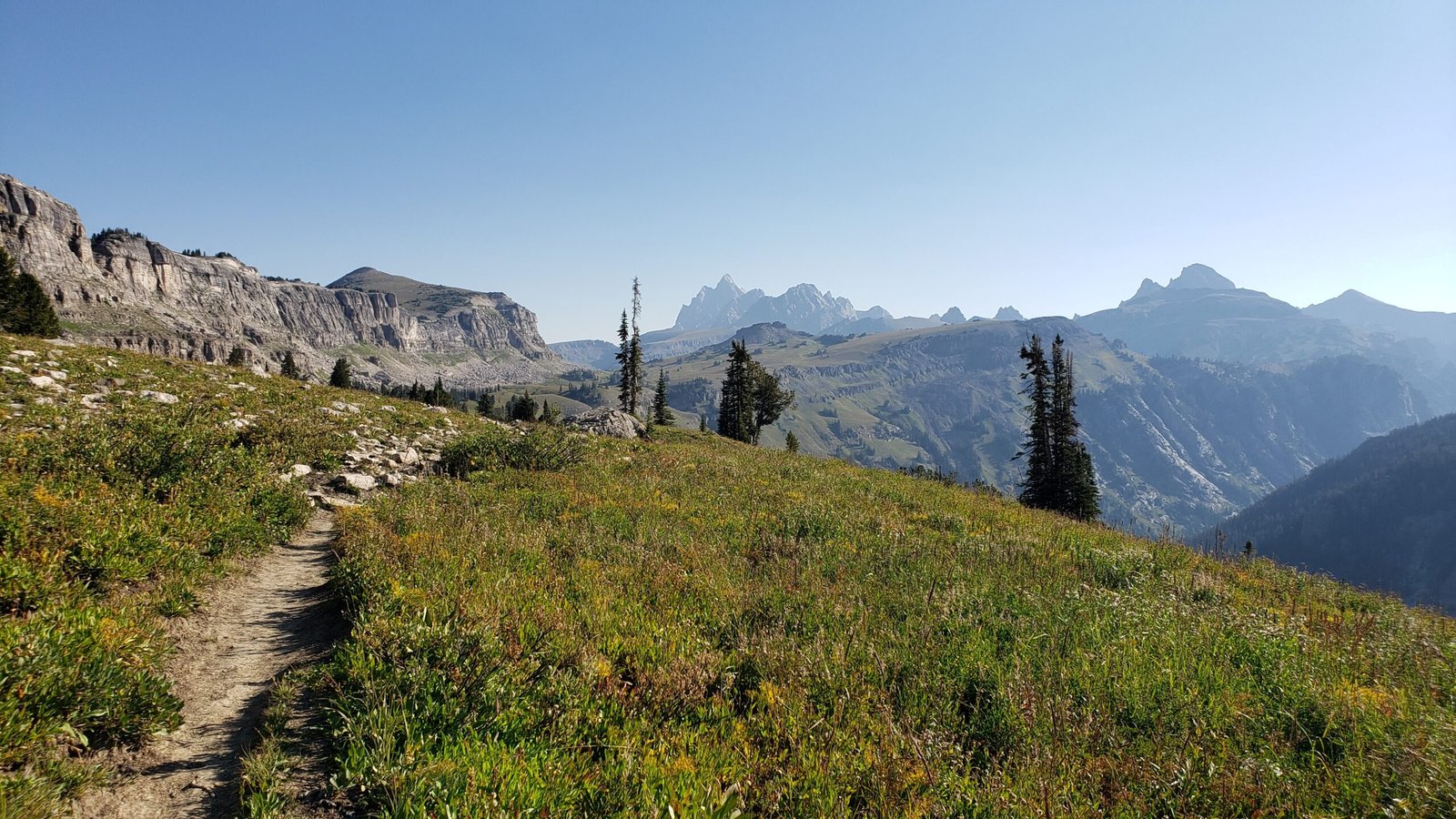
Then one morning, out on a hike above our home, it came into full focus.
Val
We were on a trail we know well, and somewhere on the climb I started seeing our divorce journey laid out against Jared’s model. Not just loosely — precisely. The early years of our marriages, when everything seemed clear and we were certain we were doing everything right. The slow descent into confusion and pain. The pit. And then — and this is what moved me — the climb out. The work of it. The becoming. I stopped walking and just stood there for a moment. It didn’t fix anything. But it made sense of everything.
Bruce
What struck me was this: the painful parts didn’t disappear from the map. They were still there — every hard moment, every decision, every loss. But they became waypoints rather than destinations. When we name something on the path, it stops feeling like the whole story. It becomes a moment in a longer arc. That shift in perspective has changed the way I talk about hard things, with Val, with our children, with myself. Just saying “I think we’re here on the journey” turns a frustrating challenge into something you can move through.
We want to share that map with you.
The journey, phase by phase
The shape is not a straight line. It curves downward before it rises. And where it arrives — if you keep moving — is higher than where it began. Here is what each phase looks like.
Innocence. This is where most of us begin. Life feels clear, expectations are high, and we are certain, in a quiet way, that things will go well because we are doing things right. There is real beauty in this phase. But there is also a blindness to it — a tendency to look at those who are struggling and assume they must have done something wrong. We were both here once. We are not proud of some of what we thought.
Descent — disillusionment. Something begins to shift. The marriage is not what we hoped. Problems surface that we don’t have words for. We try harder, we try differently, we try to go back — but the path behind us is closed. The descent is disorienting because it feels like failure when it is actually the beginning of growth.
The Pit — anguish. This is the floor of the journey. For us, it was divorce. Not just the legal event, but everything that surrounded it — the grief, the confusion, the shame, the fear, the devastating sense that something irreplaceable had been lost. If you are here right now, we want you to know: we have been here too. And we want you to know something else — this is not the end of the story.
Choices — moments of decision. The valley floor is where the decisions live. Stay or go. Wait or act. Forgive now, or forgive later. Reach for help, or carry it alone. We do not believe there is one right answer to most of these questions; the right answer is the one you can live with. We will say this clearly: deciding is the work here. Refusing to decide is its own kind of decision, and it has its own cost.
Ascent — healing. The climb out happens through outward work. Letting go of resentment. Learning to set boundaries. Building the skills and habits that were missing or broken. Forgiving — others and yourself. This phase is not glamorous. It is honest, difficult, necessary work. But something begins to loosen.
Becoming — helping. The work that started outward now turns inward. Self-compassion deepens. Authentic love — for yourself, for others, even for those who hurt you — starts to take root. You are no longer just healing. You are being changed. And as you are changed, something else becomes possible: you can begin to walk alongside others on their own path. Not judging. Not condemning. Not building roadblocks. Learning, as you go, to love them in the way they need to be loved — not just in the way that comes naturally to you.
Holiness. We use this word carefully and humbly. We do not mean perfection. We mean something more like wholeness — a peace and a capacity for love that you could not have reached without the journey. The remarkable thing about Jared’s model, and our experience, is that the place you arrive is genuinely higher than where you began. Not in spite of the Pit, but because of it.
And if men come unto me I will show unto them their weakness. I give unto men weakness that they may be humble; and my grace is sufficient for all men that humble themselves before me; for if they will humble themselves before me, and have faith in me, then will I make weak things become strong unto them.
Ether 12:27A few things worth knowing about this journey
It is not linear. You will move forward and backward. You will feel like you have arrived somewhere and then find yourself sliding. That is normal. The overall direction is what matters, not the daily position.
You can be in different phases in different parts of your life simultaneously. Jared makes this point and it has been true in our experience. You might be well into Becoming in how you relate to your former spouse while still ascending in how you relate to yourself. The map is not a single dot. It is several.
There are false summits. Wrong turns taken just after the climb begins — paths that feel like progress but aren’t. A hardened victim story. A tight tribe that sustains itself on shared grievance. Patterns of self-protection that look like growth. These are easy to confuse with healing, especially because they appear so early on the way up. We will talk about them honestly on this site, because we have each spent time on them.
This journey is not unique to divorce. We write from our own experience, which is divorce, and we do not shy away from that. But we have watched people take this same journey through illness, through loss of faith, through betrayal of every kind. If your story is different from ours, we believe you will still find yourself somewhere on this map.
Val & Bruce
We are not at the end of this journey. We are not sure anyone fully arrives in this life. But we have seen enough of what lies ahead to tell you with complete honesty that it is worth moving toward. The happiness we feel now — in our marriage, in our relationships with our children, in our own hearts — is not something we could have imagined from the pit. It is real, and it is the fruit of a journey we would not trade, even knowing everything it cost.
Every post on this site lives somewhere on this map. We will tell you where as we go. Our hope is that knowing where you are — even in the hardest moments — gives you what it gave us on that hillside: not a way out, but a way through.
Wherever you are on this path — even if you are not sure you are on one at all — there is a next step. And it leads somewhere worth going.
When you’re ready, the next post is waiting.
The language of healing — why words matter →Where do you find yourself on this journey?
We’d love to hear where this map lands for you — whether it resonates, surprises you, or raises questions. Comments are moderated with kindness.
Leave a comment