
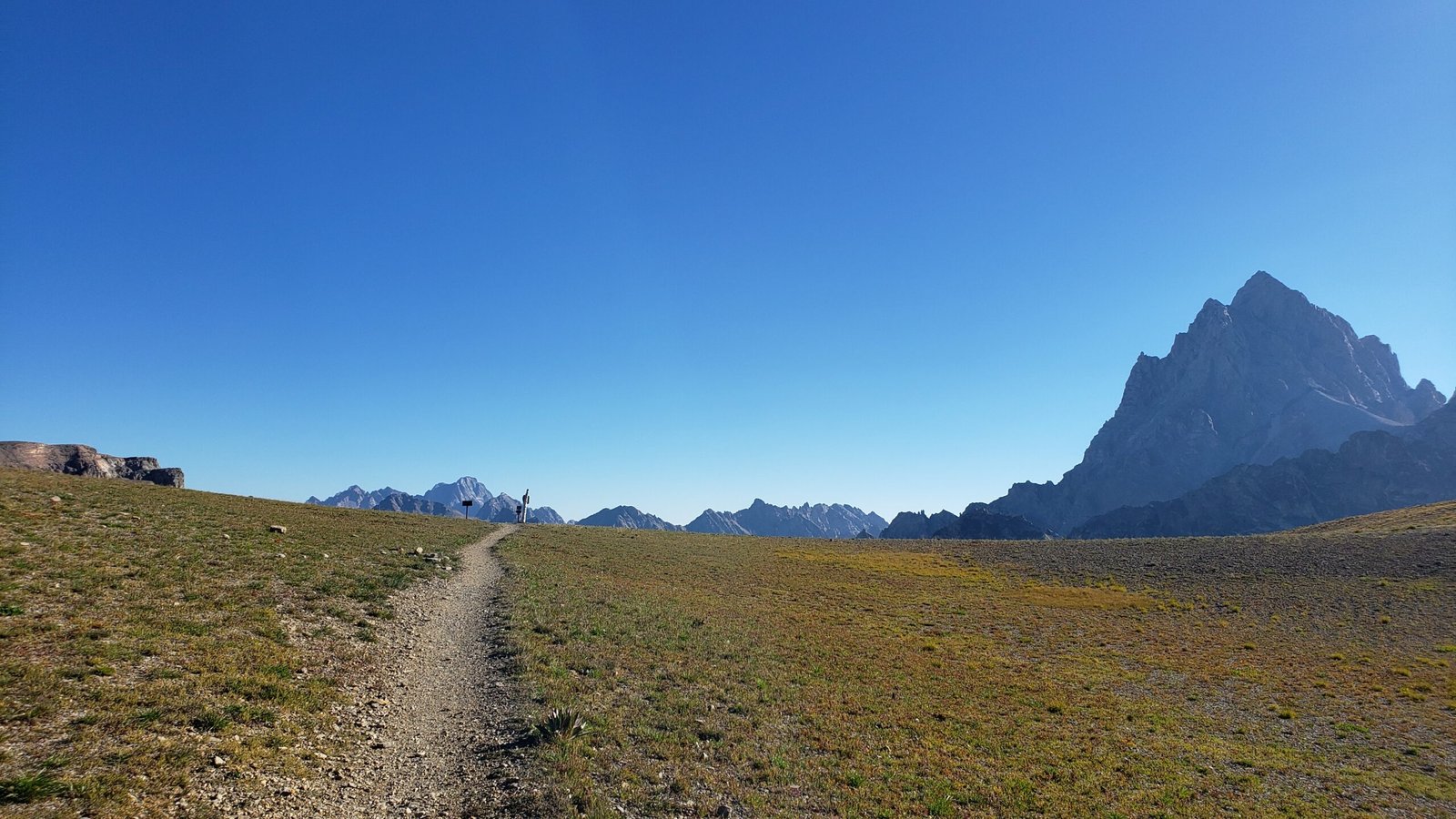
Before we knew what we didn’t know
Before we knew what we didn’t know
There is a peak most of us visit before the descent begins. The view is wonderful. The confidence is complete. And the fall, when it comes, is steeper than we ever imagined.
There is a concept in psychology called the Dunning-Kruger effect. The short version: when we know a little about something, our confidence soars. We feel like experts. It is only when we know more — when we have lived more, suffered more, learned more — that we realize how much we didn’t know. The peak of that early false confidence has been given a name: Mount Stupid. Or, as Jared Halverson coined, and we prefer to call it with a little more warmth toward our former selves: Mount Stupidity.
Most of us spent time up there. The view really is wonderful. Everything makes sense. You can see clearly who is struggling and why. The answers seem obvious. You feel, quietly but completely, like you are doing things right.
We were both there. We stayed for a while. And we have spent a great deal of time since then understanding what we actually believed from that summit — and what it cost.
The view from the top
From Mount Stupidity, the world has a certain satisfying logic. People who are doing the right things are generally doing well. People who are struggling have, somewhere along the way, made choices that led them there. It is not a cruel belief — most people who hold it consider themselves compassionate. They feel sorry for those who are struggling. They want to help. They just also believe, quietly, that if those people would do what they are doing, things would improve.
In our faith community, this belief has a particular flavor. It attaches itself to specific practices. Daily prayer. Scripture study. Family home evening. Temple attendance. Fulfilling callings. Serving neighbors. These are genuinely good things — we believe that and still do. But on Mount Stupidity, they become something else: a formula. A guarantee. A quiet contract with God that if we keep our end, He will keep His.
Val
One view I’ve come to associate with Mount Stupidity is the elitism that can quietly pervade our culture — the belief that as a people, or as individuals, we are somehow better than others. That God loves us more. I held versions of this belief without fully realizing it. When I saw another family struggling in their marriage, some part of me assumed they must not be doing the little things every day. That if they were praying together, studying together, serving together, they wouldn’t be in that situation.
I’ve come to understand something since then: God loves all His children. Every single one. And when Christ said to love your neighbor, He meant everyone — not just the ones who look like us, believe like us, or are managing their lives the way we think they should. If I look at another person and think I am better than them, I am the one sinning. The judgment I was directing outward was the very thing I needed to examine in myself.
Bruce
There are so many illusions when you’re peering down from Mount Stupidity. But as I look back, the one that stands out most is the belief that if I’m just doing everything right, things will work out. In our family, we tried to do everything right — both the little things and the big things. We prayed and read together. We held and tried to magnify our callings. We helped our neighbors. In my mind, that should have guaranteed that our family would be protected.
It didn’t. Watching our family break apart was already a crushing blow. But adding the fall from Mount Stupidity made the impact even more brutal. I hadn’t just lost something I loved — I had also lost the framework I used to make sense of the world. Both fell at the same time.
Two kinds of damage
What we both came to understand — slowly, painfully, and with a lot of help — is that camping out on Mount Stupidity causes two kinds of damage.
The first is the damage to others. When you look down on people who are struggling and assume they must be doing something wrong, you withdraw the very thing they need most: compassion without conditions. You may not say anything unkind. You may not even be aware you’re doing it. But the quiet assumption is there, shaping how you show up — or don’t — for the people around you who are in the Fall.
The second is the damage to yourself. The certainty that doing everything right guarantees good outcomes is a fragile foundation. It feels like faith, but it is actually a transaction. And when life does not honor the transaction — when the marriage struggles despite the prayers, when the family breaks despite the scripture study — the fall is not just painful. It is disorienting in a way that purely external suffering is not. Because what falls is not just a marriage. It is a whole way of understanding how the world works.
As Bruce put it: camping out on Mount Stupidity not only hurts those you are looking down on — it also sets you up for a painful fall.
Getting down
The good news about Mount Stupidity is that most people do eventually come down. Life has a way of arranging that. Sometimes the descent is gradual — a slow accumulation of experiences that quietly revise your certainties. Sometimes it is sudden and steep. Either way, what waits on the other side of that descent is something much more valuable than the confidence you had at the top.
It is humility. Not the performative kind — the real kind, the kind that comes from having been wrong about something important and knowing it. The kind that makes you slow to judge and quick to extend grace, because you remember what it felt like to need grace yourself.
It is also, we have found, a far more accurate picture of God. The God we have come to know through our own descents is not keeping score of our checklist compliance. He is not more present in families who do all the right things. He is present everywhere — in the pit as much as on the plateau, perhaps more so. His love is not a reward for performance. It is simply and completely given.
Val & Bruce
We are not writing this to suggest you stop doing the good things. Keep praying. Keep reading. Keep serving. These things matter — not as a formula for avoiding suffering, but as practices that shape who you are and draw you closer to God. The difference is in why you do them and what you expect from them.
And if you find yourself looking at someone else’s struggle and feeling, somewhere in the back of your mind, that quiet certainty that you know why — we’d gently invite you to sit with that feeling for a moment. Not with judgment toward yourself. Just with curiosity. Because the person you’re looking at may be living through something that would undo you if you knew what it was. And they are probably doing the best they can.
We know, because we were that person too. And someone’s grace toward us — offered without conditions — made all the difference.
Judge not, that ye be not judged. For with what judgment ye judge, ye shall be judged: and with what measure ye mete, it shall be measured to you again.
Matthew 7:1–2This is not a warning about the hereafter. It is a description of how things actually work right now. The standard we apply to others becomes the standard we apply to ourselves. The compassion we withhold from those who are struggling is the compassion we will not be able to receive when we are the ones struggling.
Getting off Mount Stupidity is not a defeat. It is the beginning of something much better than certainty. It is the beginning of understanding.
The view from the bottom is harder. But it is also, finally, true.
When you’re ready, the next post is waiting.
The honeymoon phase is definitely over →Have you been on Mount Stupidity?
We’d love to hear what the view looked like from where you were standing — and what helped you find your way down. Comments are moderated with kindness.
Leave a comment