
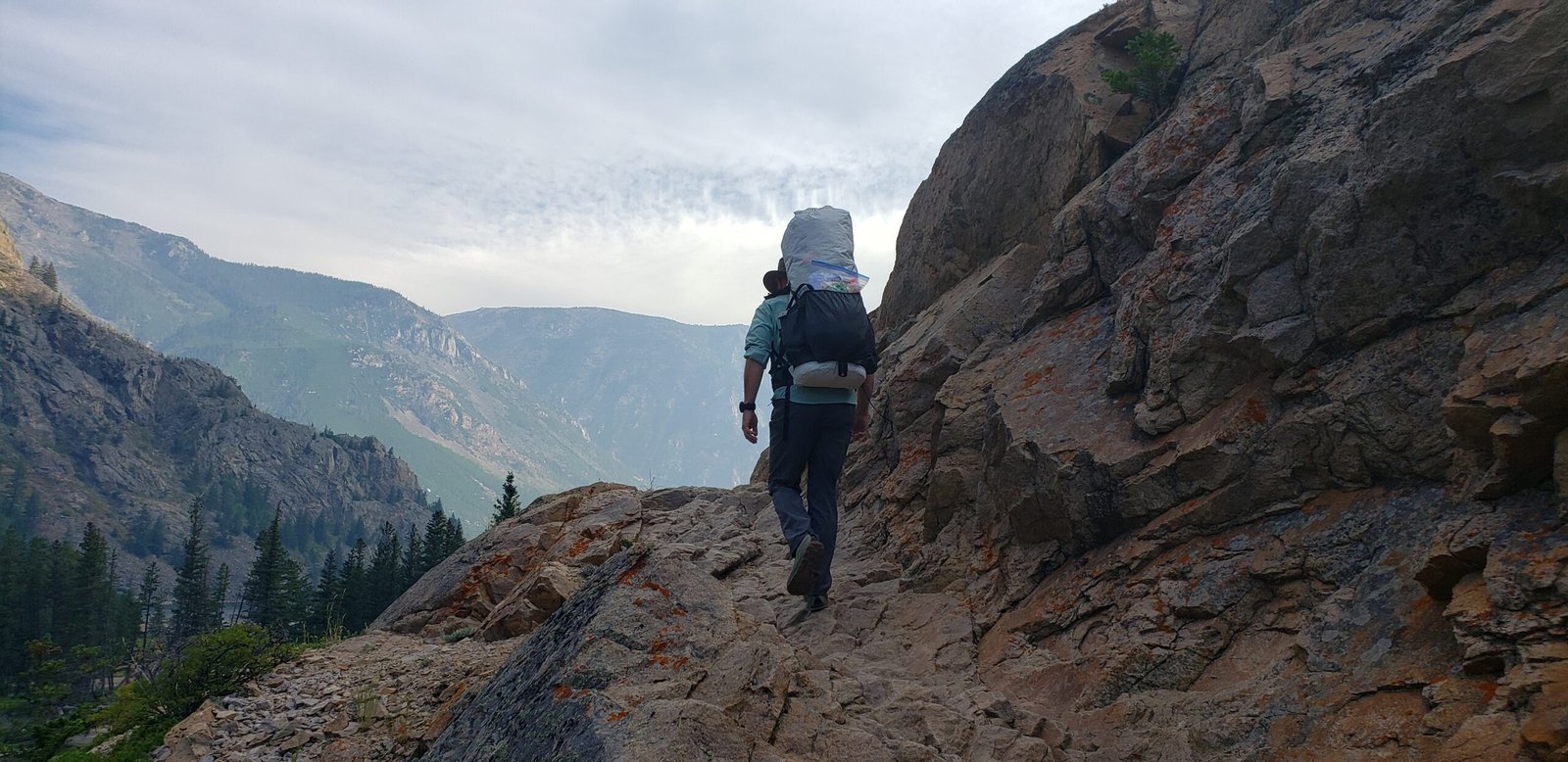
Authenticity
Authenticity
The illusion of perfection costs more than we know. This post is about putting it down, the help we needed to do it, and why authenticity is the gateway to who we are becoming.I once carried a 90-pound backpack up a mountain near my old home. The hike was only about four miles, but it climbed over 3,000 feet, and I had been foolish enough to load that pack the way I did. The climb was slow and arduous. I made a lot of stops. But I never took the pack off, because I knew that if I did, I would have a hard time getting it back on. So I just kept moving, one slow step at a time.
When I finally reached the top, I dropped the pack.
What happened next was something I have never forgotten. I felt like I was floating. Not metaphorically — physically. My body felt so light I could barely orient myself. I had gradually become so accustomed to the weight that I had forgotten what it felt like to not have it on. Lightness felt like flying.
I think about that hike often, because I have come to believe that most of us are walking around carrying weight we have stopped noticing. The weight has a name. We call it the illusion of perfection.
The illusion of perfection
The illusion works like this. I know I am not perfect. But when I look around me, everyone else seems to be doing pretty well. Their families look intact. Their faith looks strong. Their lives look like the kind of life I am supposed to want. So I start to perform a version of that life myself. I dress the part. I say the right things. I keep the parts of me that don’t fit hidden, even from people I’m close to. Especially from them.
What I don’t realize is that everyone around me is doing the same thing. They are looking at my performance and concluding that I have it together, and they are working harder to make sure I conclude the same about them. The illusion is not something one person constructs alone. It is a structure we build together, each one of us holding up a piece for the others, each one terrified that if we let our piece slip, we will be exposed as the only one who isn’t doing it for real.
The religious culture I grew up in does not always know how to talk about this. We are taught that no one is perfect except the Savior. We say it from the pulpit. We mean it. And then we walk out into the foyer and continue performing for each other.
I lived inside that illusion for a long time. I worked very hard to maintain it. Some of the work was conscious — what I said, what I let other people see. But most of it was not. Most of it was so habitual I could not have told you I was doing it. The illusion was the air I breathed.
Years of trying
About ten years ago, I began reading the work of Brené Brown. Her writing on vulnerability and authenticity gave me language for something I had felt but had never been able to name. I recognized myself in what she was describing. And I started to try.
I have to be honest about what trying looked like at first. I was strategic. I let go of the illusions that felt safe to let go of, and I held tightly to the ones I was most afraid to lose. I was changing — but slowly, and selectively, and with a careful eye on which parts of my self-image I was not yet willing to risk.
I do not say this to minimize that period. Those first years of slow, partial, strategic authenticity were real change. They mattered. They moved me toward something. But the work was not complete, and I do not think it would have become complete on its own. I had built the illusion over decades. I was not going to dismantle it through good intentions and a few books.
What dismantled it was divorce.
When my marriage ended, large pieces of the illusion came down whether I wanted them to or not. The shingles started falling off the roof, and I could not climb fast enough to put them back on. Everyone saw. Everyone knew.
And here is what surprised me. The choice was not over. Even with so much exposed, I still had to decide what to do with what remained. I could spend my energy frantically trying to rebuild the illusion — explaining away what had happened, blaming circumstances, blaming others, constructing a new and more elaborate performance to cover what the old one had concealed. Or I could let the demolition complete.
I chose, with great difficulty, to let it complete.
The moment of truth
I remember the first Sunday I attended a church meeting at my sister’s congregation. Someone asked me, kindly, So tell us about yourself. It was the moment of truth. I could give them the polished biography that made me look like I was supposed to look. Or I could tell them what was actually true — that my marriage was ending, that I was rebuilding my life, that I was trying to find my footing everywhere, even here at church.
I told them the truth. I am sure some of them were shocked. But what surprised me was not their reaction. It was mine. I felt relieved. I had not realized how much energy I had been spending to hold up the version of myself I was no longer holding up.
I faced the same choice not long after with the team I led at work. Same decision. Same difficulty. Same relief.
This is one of the things I want to say to anyone reading this who is still inside the illusion. You have no idea what it is costing you. You cannot know. The illusion is partly designed to keep you from knowing — to dampen your awareness of the weight, to make it feel normal, to convince you that the energy you are spending is just what life requires. It is not. You are carrying a backpack you have stopped feeling, and you will not believe how light you are without it until you take it off.
Val
My obstacle was different from Bruce’s. I wanted to be authentic. I wasn’t holding up an illusion for myself. I was bound by what we’ve called the casserole rules — the unwritten understanding that certain kinds of difficulty are met with community support, and certain kinds are met with silence.
I tried, a few times, to talk with church leaders about what I was navigating. After a few of those conversations, I learned to stop trying. They were good men. What I needed to say did not fit what they were prepared to hear.
So I learned to be careful with what I let people see. Not because I wanted to perform. Because the people closest to my situation — my spouse, my children — deserved a kind of protection that fuller disclosure would have undone.
When I finally found a therapy group, the relief of being able to speak openly, with people who had earned the right to hear my story, was profound. That was the first place I could be fully myself in the situation I was actually in.
If you are in a difficult marriage right now, I want you to know: the carefulness you are practicing is not inauthenticity. There is real poise required in navigating a public life around a private struggle, especially when the struggle is partly someone else’s. Be as honest as you can with the people who have earned the right to hear it. Let grace and love shape what you say to everyone else. And forgive yourself for the discretion you keep.
I also want to be honest about my own work. I did not do this perfectly. I made mistakes. I said things I wish I hadn’t, to people who hadn’t earned the right. I held silences I wish I had broken sooner. Twenty years of learning, and I am still learning.
Not the same as telling everyone everything
One thing we want to name clearly. Authenticity is not the same as telling everyone everything. As Brené Brown has put it, people earn the right to hear your story. The friend who has shown up over years has earned it. The acquaintance who asked a polite question at a church potluck has not.
Authenticity is the goal. The amount that’s appropriate to share varies with grace and circumstance. Being honest with the people who have earned the right to know is the work. What you say to everyone else is shaped by wisdom, by privacy, by love for the people whose stories overlap with yours, and by the recognition that not every room is the right room.
When sharing slides into something else — into a need for sympathy that can’t be satisfied, into a pattern of difficulty that resists every kindness offered — there’s often something underneath that the sharing itself isn’t reaching. We don’t know your whole story. We only know that authenticity has more to do with who you are than with how much you say.
When the pull comes back
There is something else we have to say, because Val and I have both lived it. When you begin to put down the illusion, the people around you do not always cheer.
Often, they do the opposite. They reach — gently, kindly, sometimes urgently — to put you back. They offer compliments that reinscribe the role you were trying to step out of. They express disbelief when you describe yourself honestly: Oh, you’re being too hard on yourself. They get uncomfortable when you name something true that they had preferred to leave unnamed. Not because they are bad people. They are people whose own stories were partly held up by your performance, and when one piece of the structure shifts, the whole thing trembles.
The people who have done this in our lives have done it out of genuine affection and genuine care. They were not trying to keep us trapped. They were trying to comfort us, or themselves, in the only way they knew how. But the effect was the same: a steady gravitational pull back toward the illusion we were trying to leave behind. Knowing this happens helps you recognize it for what it is, and hold steady when it comes.
This is part of why authenticity is so hard to sustain alone. If the people around you are reinforcing the old version of you, you need at least one relationship in which the truer version is recognized — held steady, taken seriously, met with both trust and love.
For Val and me, that has been each other. We have helped each other through this work, slowly, with trust and grace and a fair amount of humor and patience. Neither of us could have gotten where we are without the other. But it does not have to be a spouse. The helper can be a sibling, a close friend, a counselor, a small group of people you have come to trust over time. What matters is that the relationship has earned the kind of trust where the harder parts of the truth can be spoken and received without the relationship buckling.
If you do not have someone like this yet, finding one is part of the work. The presence of one trustworthy witness changes what is possible.
Val
A few weeks ago I sat in a Sunday class in my daughter’s congregation. The lesson was on hard moments and turning to God.
The teacher shared that a few years after her divorce, her two preteen daughters had gone to visit their father in another state and decided to stay there. She did not minimize it. She did not present it neatly. She let the room see what it had cost her, and how she had been comforted by looking to God. My heart went out to her. The whole room shifted. Not just toward her. Toward each other. Toward the people in our own lives who are carrying things no one has named.
This is what authenticity can do. When one person puts down the illusion, others find they can too. The room exhaled. And the compassion that filled it was not just for her. It was for everyone.
The practice
Here is the part I think matters most.
I still do this. I have not arrived at some permanent state of authenticity that requires no more attention. The illusions try to reassemble themselves all the time, in new and subtler shapes. I notice that I care, in certain rooms, about being seen a particular way. I notice that I am tempted to let a misunderstanding stand if correcting it would expose something I would rather keep hidden. I notice that when people at church say kind things about Val and me — the two of you are the backbone of our ward — there is a part of me that wants to start embracing the label rather than gently setting it down.
The illusion is not gone. It is just no longer running unchallenged. When I see it now, I am deliberate about taking it down. The work has come down to this: noticing, in the moment, that I am about to choose the illusion, and choosing something else instead. One moment, one decision at a time.
Authenticity is not a destination you reach. It is a practice you maintain. The reward is not arrival. It is the lightness of not carrying what you used to carry, again and again, as the weight tries to return.
Why this matters for Becoming
The Ascent phase of this site is all about doing. It is about the long, faithful work of climbing out of the pit — building habits, repairing what is broken, learning new ways to live. That work is necessary. Without it, nothing else is possible. But there is a moment in the ascent when the doing has to lead somewhere. It has to start producing not just better behavior, but a different person.
This is Becoming. And here is what Val and I have come to believe, with all the conviction we have:
Becoming is not possible while we are still inside the illusion of perfection. Without authenticity, all our doing just serves to shore up the illusion. We can do the right things — climb out of the pit, build the habits, repair what is broken — and find at the end of years of effort that we have become a more polished version of the person we have always been. Better dressed. Still pretending.
What makes the doing produce becoming is the willingness to let the doing be honest. To let the weakness be visible to yourself first, and then, gradually and as you can bear it, to others. The scripture promises,
If men come unto me I will show unto them their weakness … that they may be humble; and my grace is sufficient.
The grace is sufficient for the weakness we admit we have. It cannot reach the weakness we are still hiding from ourselves.
This is why we believe authenticity is the gateway to Becoming. Not the only thing required, but the thing without which nothing else takes.
The packs we carry now
I have not stopped backpacking. I love it. I still do it, regularly, with Val. And every time I put on a pack, and every time I take one off, I am amazed all over again at the difference.
But the packs we carry now are different.
Two years into our marriage, Val and I took my daughter and niece on the Teton Crest trail. I loaded my pack with everything they might need so they could have fun without feeling burdened. It weighed 65 pounds. I was older than I had been on the mountain near my old home, and I had done years of authenticity work by then. And I still ended that first day so depleted that Val called the trip — we hiked out the next morning instead of finishing.
After that hike, Val and I did something we should have done earlier. We didn’t just pack lighter. We replaced our equipment. We went ultralight — better tents, better sleeping bags, lighter cookware, smarter clothing. My pack now weighs 22 pounds, fully loaded for a multi-day adventure. Val’s weighs 13. We can hike further, more comfortably, more honestly with what our bodies can actually carry.
Looking back, I can see what that 65-pound pack was. It was the illusion in a different shape — the man who carries everything, the man whose people never have to feel the weight. The redesign wasn’t only about gear. It was about which version of myself I was willing to keep carrying.
This is what we have come to believe about authenticity. The work is not only learning, moment by moment, what to set down. It is also, periodically, looking at the whole system you are carrying and asking what could be redesigned. What you have been hauling because you thought you had to. What you could replace with something lighter. What you could leave behind for good.
The pack comes off. And then the next pack you pick up is different from the one you set down.
One moment, one decision, one redesign at a time.
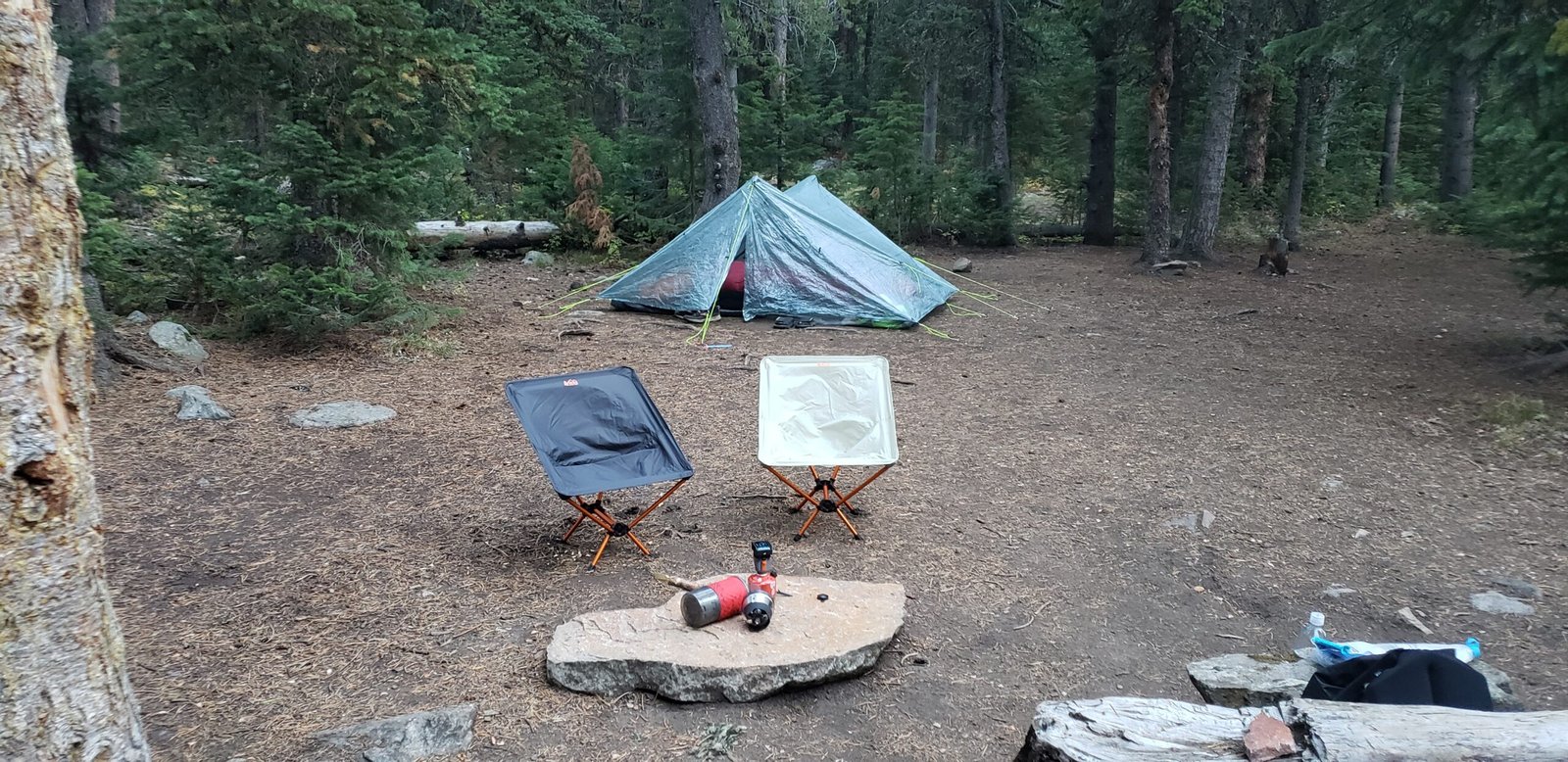
The pack comes off. And then the next pack you pick up is different from the one you set down. One moment, one decision, one redesign at a time. That is the work. And it is enough.
When you’re ready, the next post is waiting.
Loving in their language →Have you put down a piece of the illusion — or felt the pull when you tried?
If something here resonates with something you have lived, we would love to hear it. Comments are moderated with kindness.
Leave a comment